
Operate & Learn
Reduce repeated selling effort, support complex deals and interpret connected signals.

After the storefront exists, the seller side also needs demand handling, conversation tools and interpretation layers.
These supporting visuals do not replace the architecture sections above. They help show what the seller-side operating surface can look like once requests, communication and interpretation become visible. Together they support the broader story around customer requests, Radar demand, AutoChat, Mazzaneh Yar and Analytics.
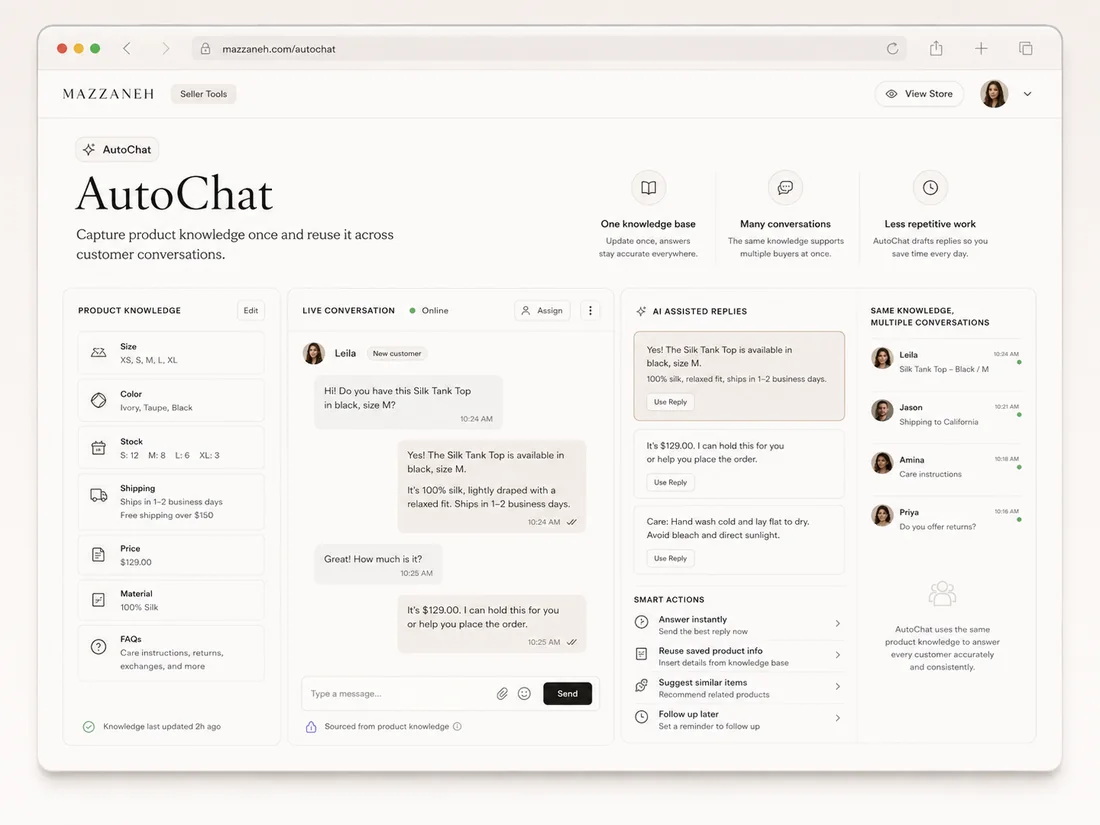
Capture product knowledge once.
AutoChat helps reduce repetitive seller interruption by reusing structured product or store knowledge in buyer conversations.
Interpretation: the seller does not need to manually repeat the same explanation every time if core product knowledge has already been captured.
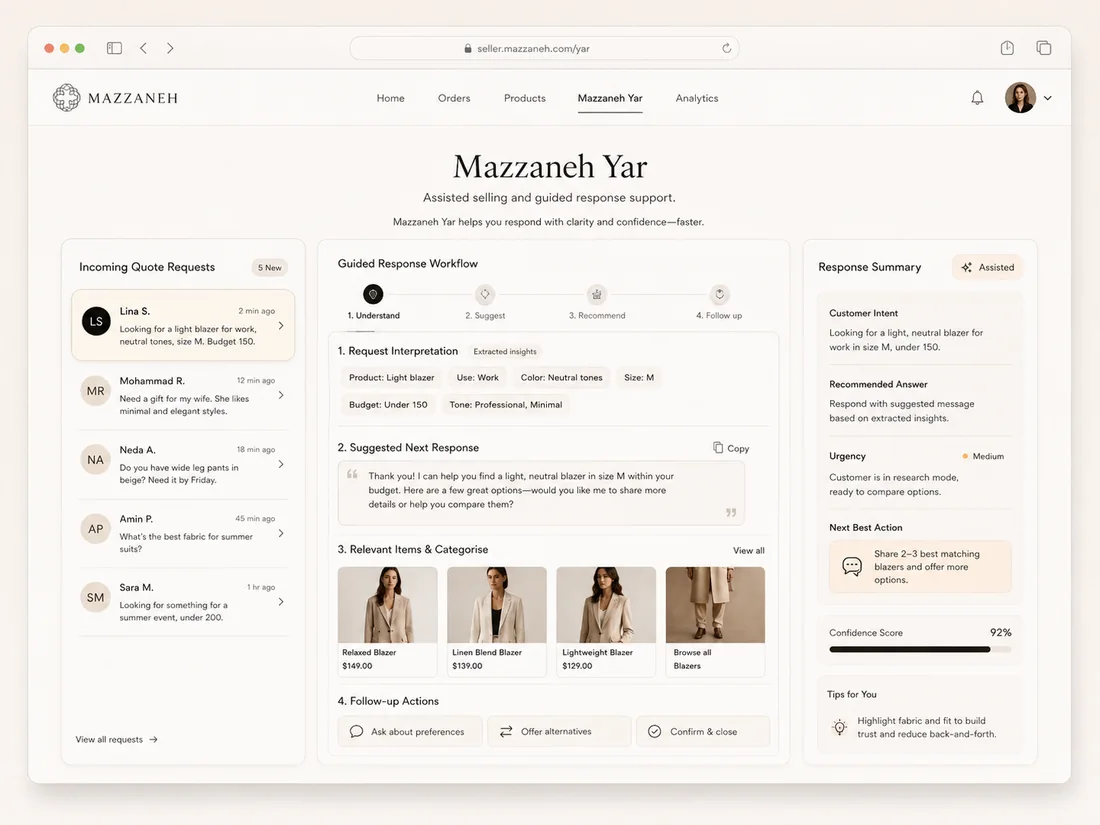
Guided selling for more complex deals.
Mazzaneh Yar is the assisted-selling layer for deals that benefit from more guidance, coordination or higher-touch support.
Historical Phase 1 role: this is the professional / assisted-selling side of the system, especially useful when a transaction needs more than a simple product card. The later MAZ-YAR AI-assistant reuse is a separate chronology and is not being merged into this visual.
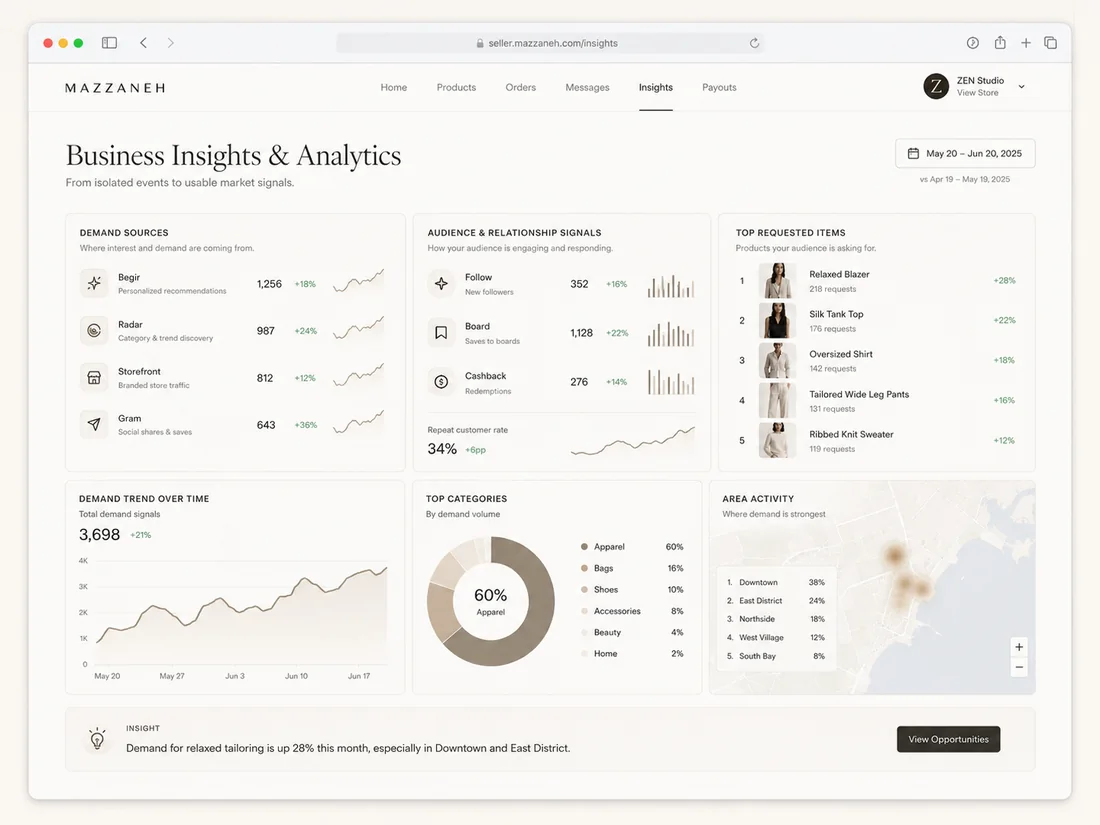
Interpret demand, participation and outcomes together.
Analytics is where the business can start reading patterns across requests, relationships, interactions and commerce instead of treating every event in isolation.
Why it matters: once storefront activity, customer requests, campaigns and transactions exist, the seller side benefits from a synthesis layer that can help interpret what is working and where demand is forming.

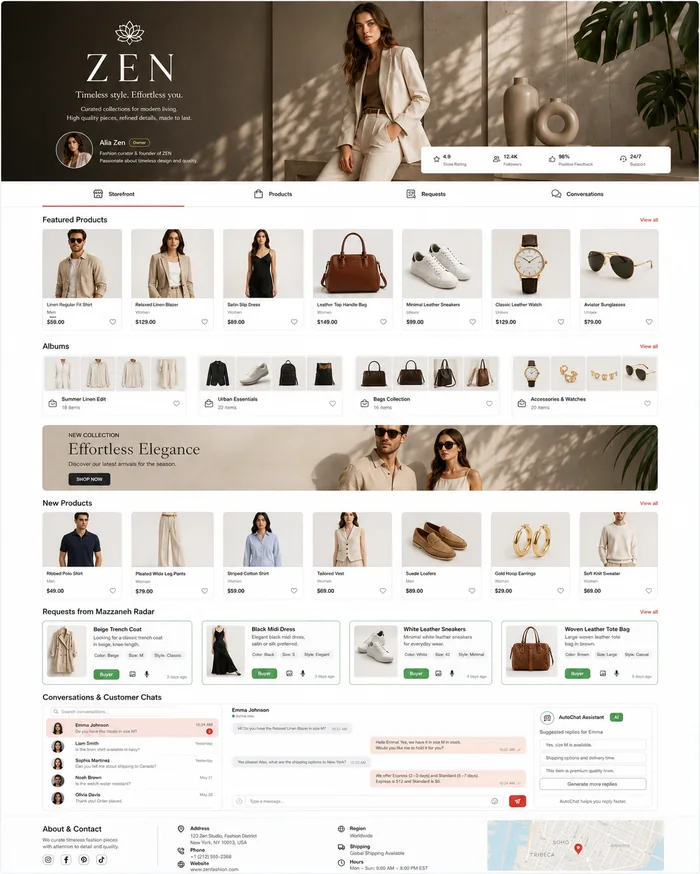
Interfaces explain the architecture. Evidence decides the claim.
These interface visuals are explanatory reconstructions used to make the seller-side architecture easier to see. They do not replace historical evidence review and should be read together with the text boundaries already established in the Business architecture.
AutoChat boundary
Capture structured product knowledge once so repeated buyer questions do not always require repeated seller effort.
Mazzaneh Yar boundary
A later business/revenue source describes a professional assisted deal-making layer for more complex or higher-value transactions.
Analytics boundary
Combine signals from demand, participation, preference and commerce rather than reading each event in isolation.