

Get Relevant Demand
Move the merchant from waiting for traffic toward responding to current, relevant buying intent.
Capture explicit demand.
The buyer expresses a need, businesses that fit that need can respond, and the seller is not required to maintain a constantly perfect price sheet for every variation.
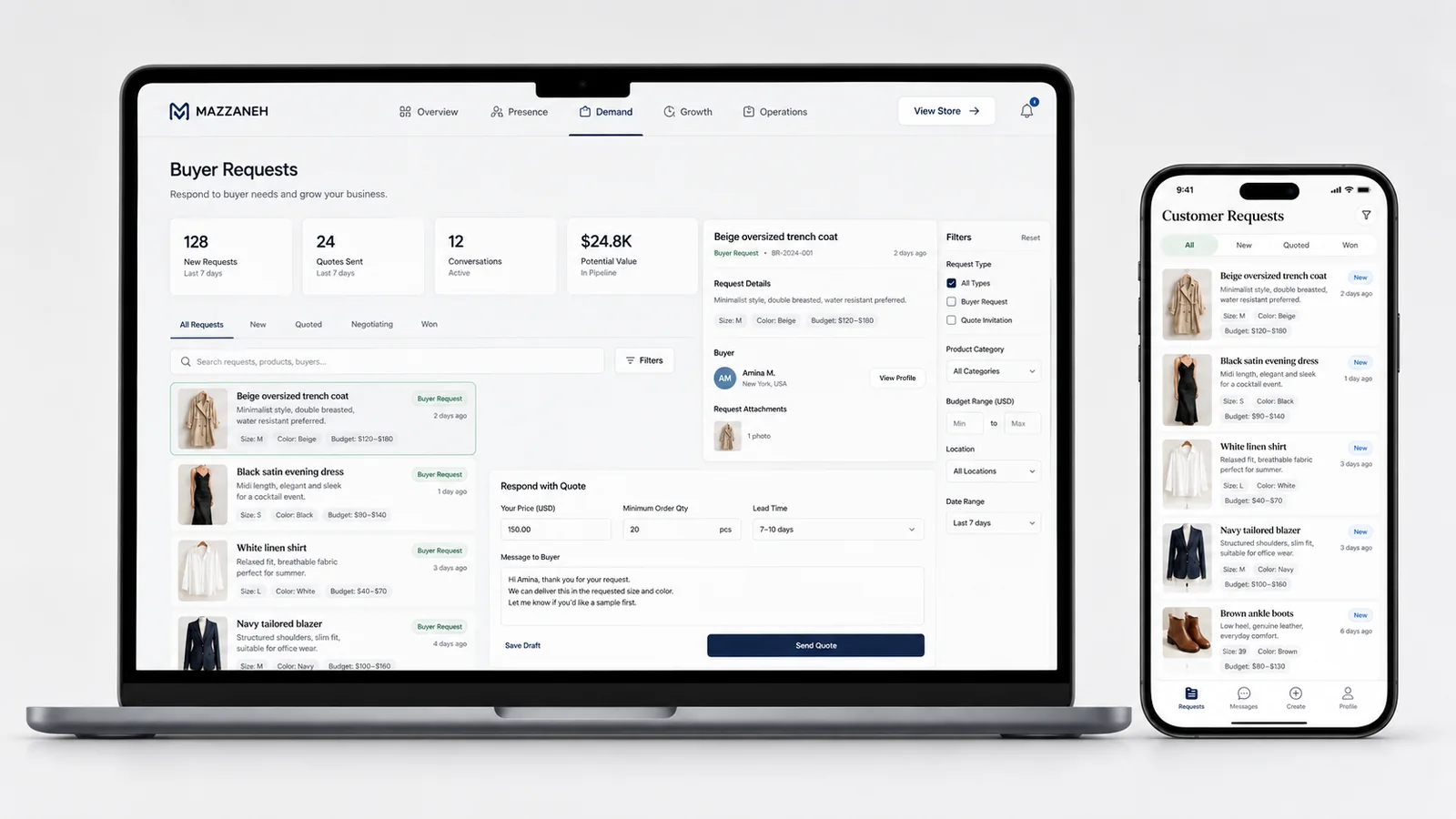
Add local and time-sensitive demand.
Add local and time-sensitive demand so nearby sellers can respond to a buyer who needs something now.

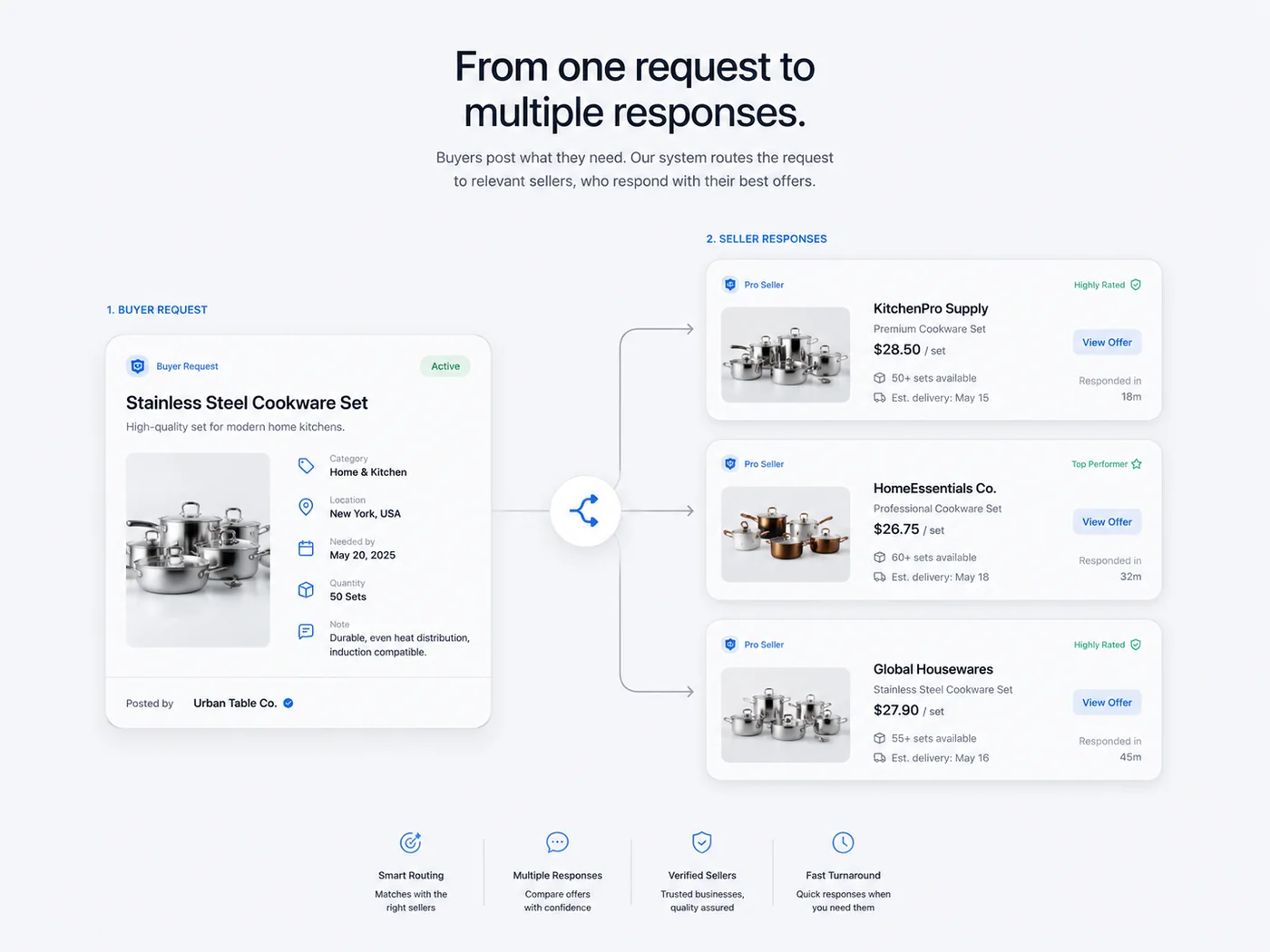
From one request to multiple responses.
Capture an explicit buyer need and route it to relevant sellers for a current private response.
Customer requests, Radar-originated requests and conversations
This dashboard-style reconstruction brings together three seller-facing needs: direct customer requests, requests that arrive through Mazzaneh Radar, and the conversation area used to continue the deal.
This mobile request pattern is aligned with the Mazzaneh logic that a buyer can ask for a specific item instead of browsing only fixed listings.
Go deeper in Sell →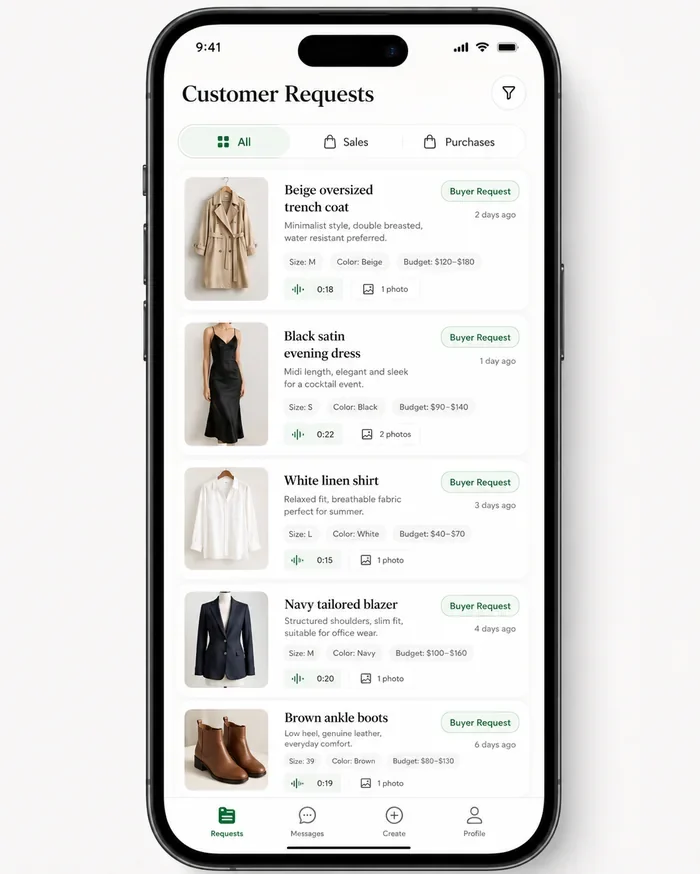
Role first. Evidence separately.
Mazzaneh did not reduce business commerce to a single listing model. Different seller needs — explicit quote requests, nearby demand, low-catalog presence, visual discovery or existing-site continuity — can route through different tools. The important review question is not “which one is the platform?” but “which path solves which problem?”
Begir boundary
This page describes the role of the route, not a claim that every business used it identically, that every request was automatically fulfilled, or that all related rules stayed constant across versions.
Relevant demand
The seller can answer the actual quantity, type, availability and conditions of the current request.
Response-driven storefront
A business page can remain actionable even without a complete inventory by letting the buyer request what is currently available.