1
Independent by module
Radar, Board, Pulino, Style Finder and other modules should each make sense as standalone product surfaces solving a clear problem.
Mazzaneh was not built as one flat marketplace. It evolved through distinct modules for demand capture, local discovery, campaigns, user value, taste signals and analytics — each useful alone, stronger together.
Important boundary: this page reads Mazzaneh as a Phase 1 modular commerce architecture. It does not merge Phase 2 solo asset formation or later convergence layers into Phase 1 proof.
Each surface solves a different constraint, but the real advantage appears when outputs from one module become context for another.
The page now uses calmer section backgrounds, more precise spacing, and a cleaner hero image that feels closer to the rest of the interface.
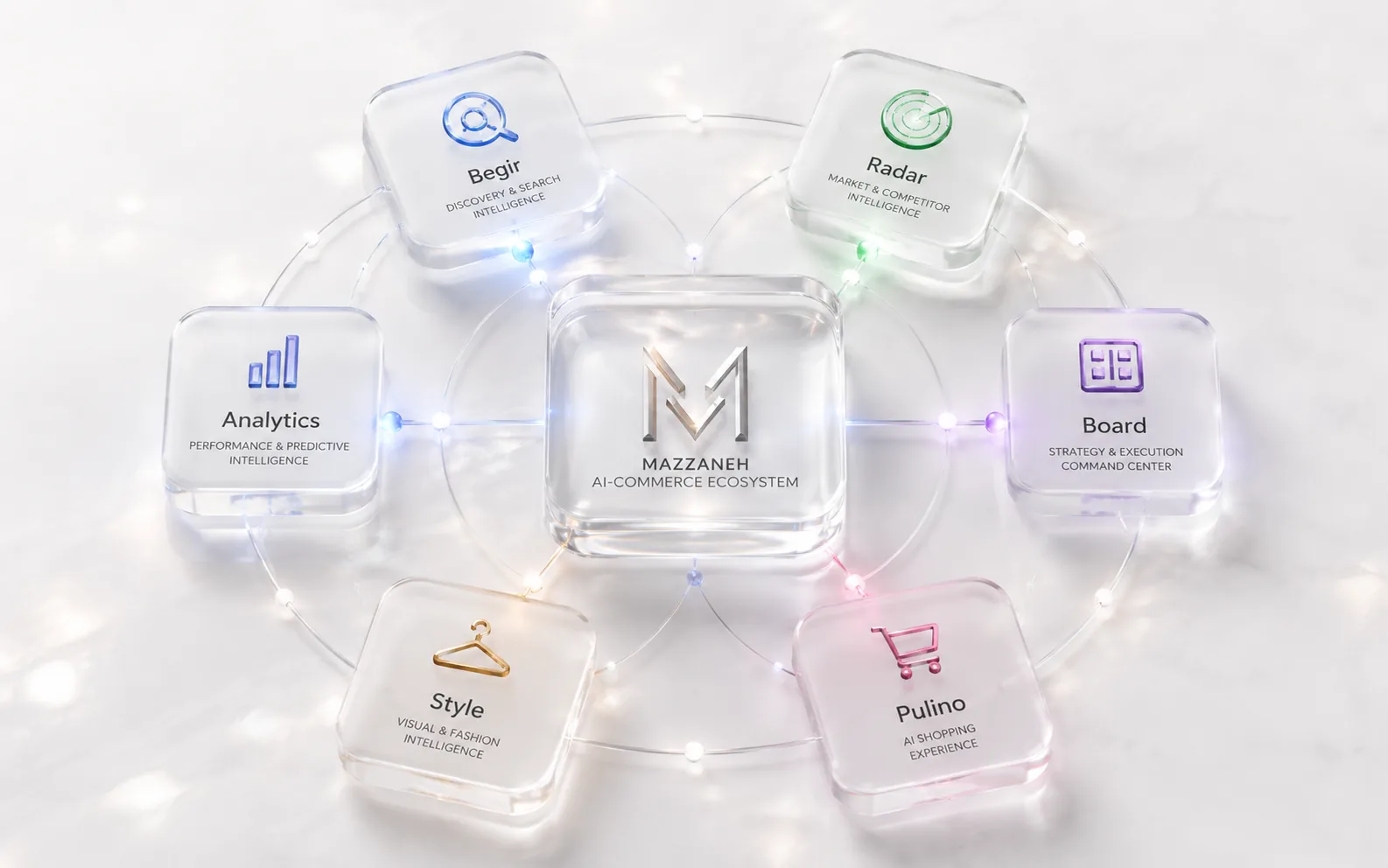
The first image now acts as a premium architectural summary instead of a heavy illustration block.
Soft silver, white and light blue fit the Apple-like page background much better.
This page is designed to reduce confusion. It shows why the system is larger than a single feature while keeping phase discipline and avoiding overclaiming.
Radar, Board, Pulino, Style Finder and other modules should each make sense as standalone product surfaces solving a clear problem.
The system becomes more distinctive when local intent, participation, preference data and value-return loops begin feeding one another.
Phase 1 is the executed modular commerce layer. Phase 2 and later convergence are separate layers and should not be mixed into Phase 1 proof automatically.
The left side is now a cleaner UI-style architecture visual instead of a vector-heavy schematic. The right side still keeps the module reading logic, so the structure remains clear while feeling closer to Mazzaneh’s product language.
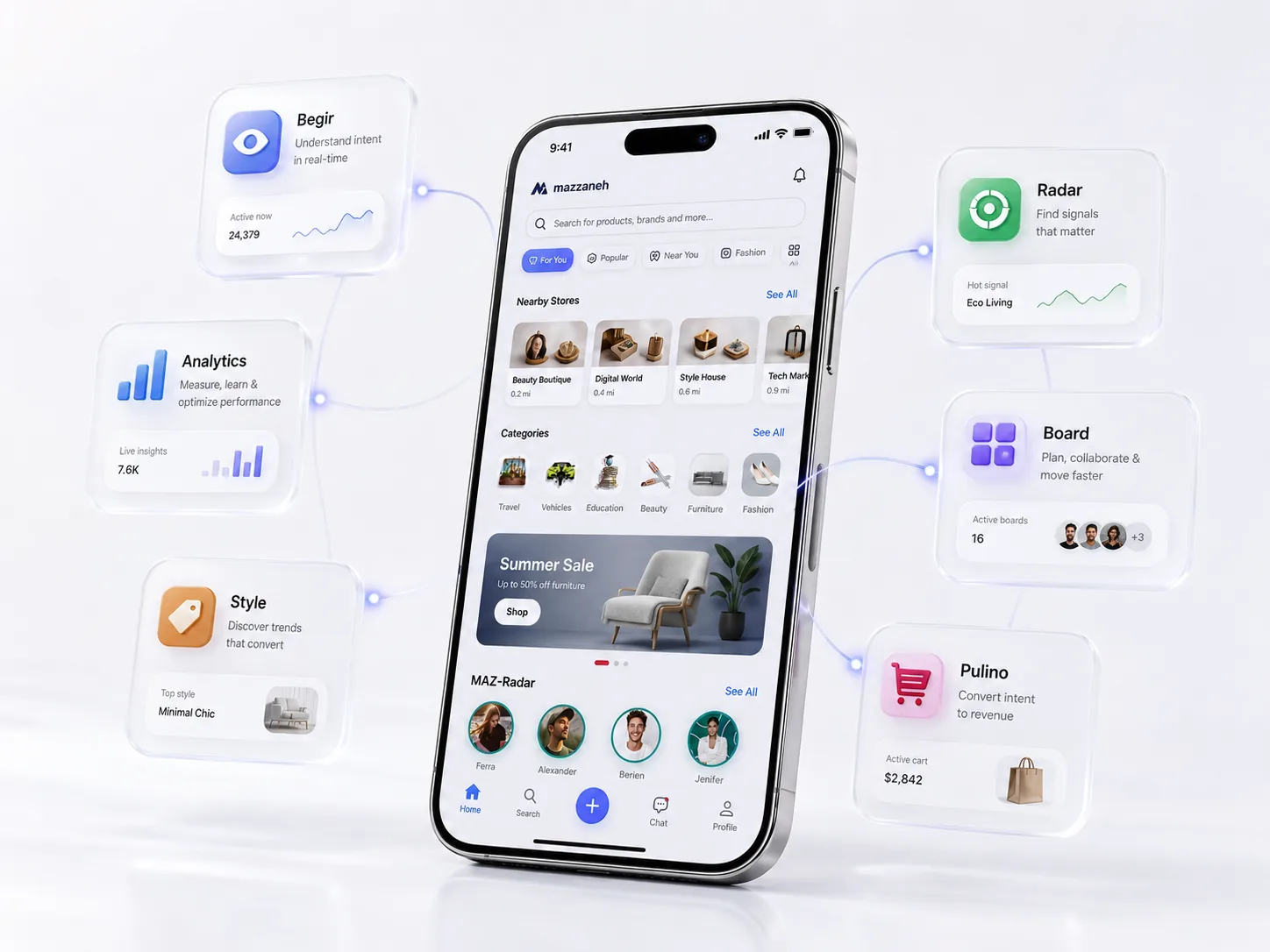
Instead of relying only on abstract blocks, this page uses actual or architecture-matched product visuals to show what each module surface looked like and what role it played.

The wallet visual is now rebuilt with a cleaner background and more premium device framing, fitting the value and earning layer better.
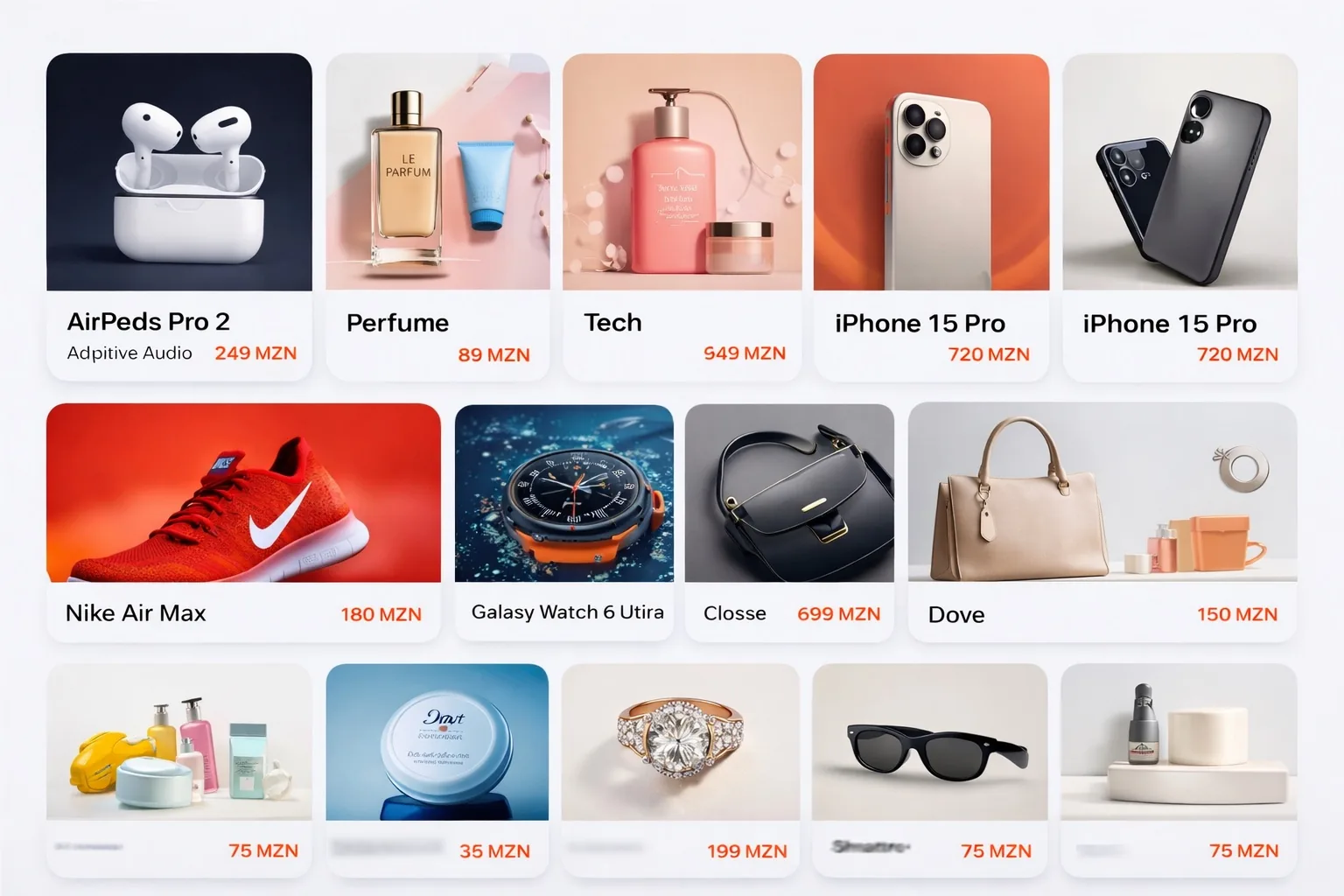
Visual product discovery, storefront presence and lower-friction browsing are easier to understand with a clearer product grid.
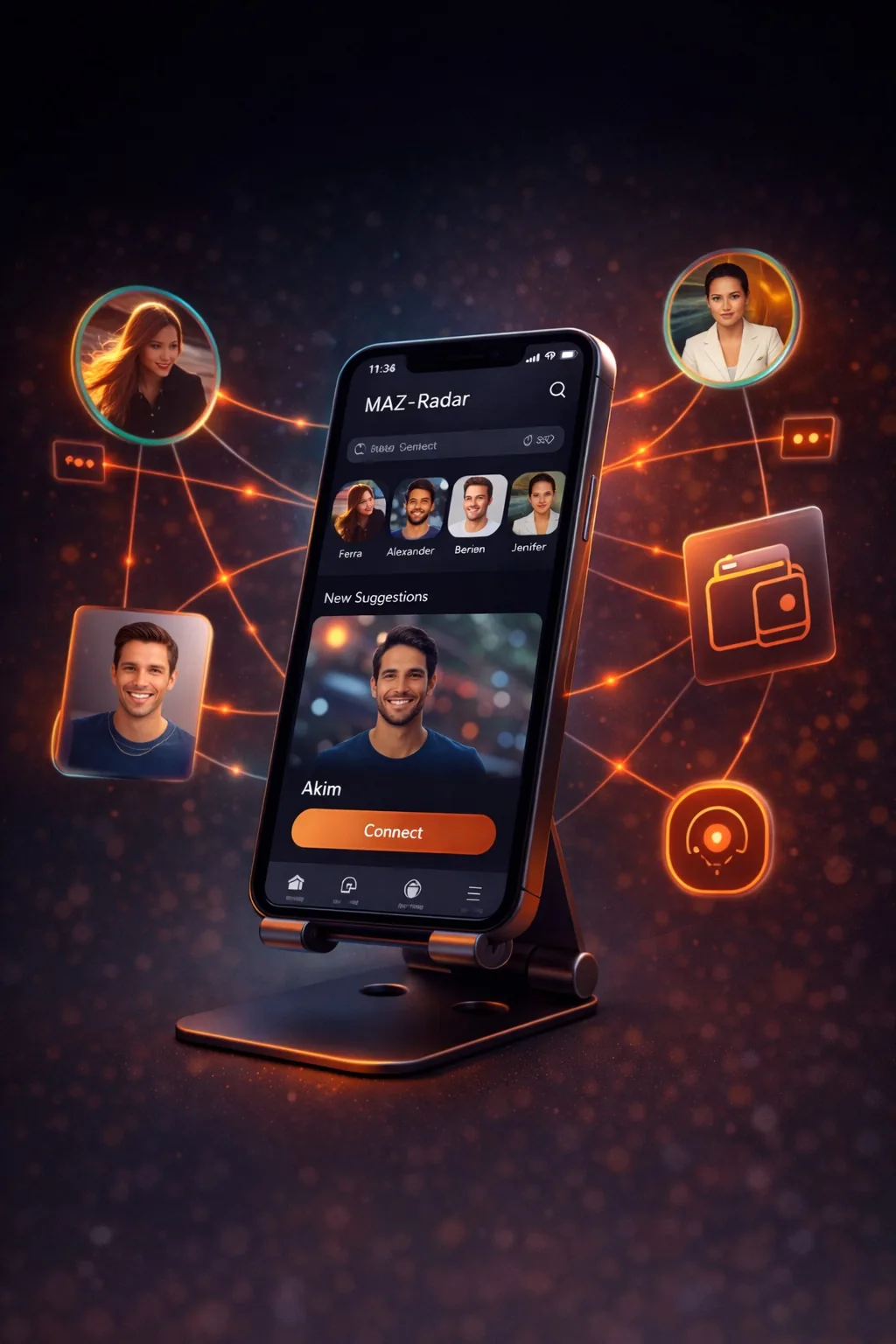
This image communicates proximity, people and mobile-first discovery much better for the Radar idea.
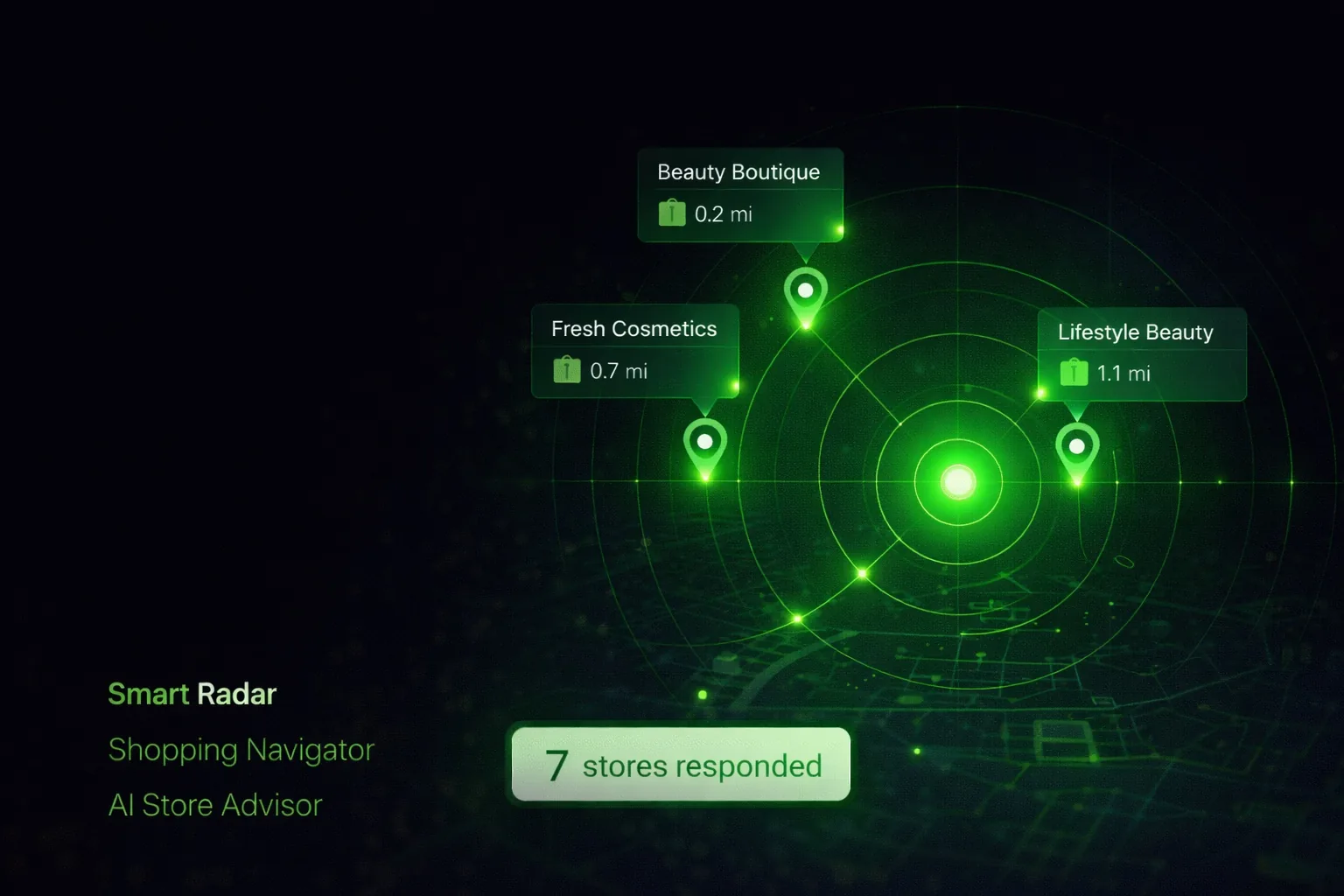
Nearby stores, response count and AI-guided discovery help show the local intent layer more clearly.
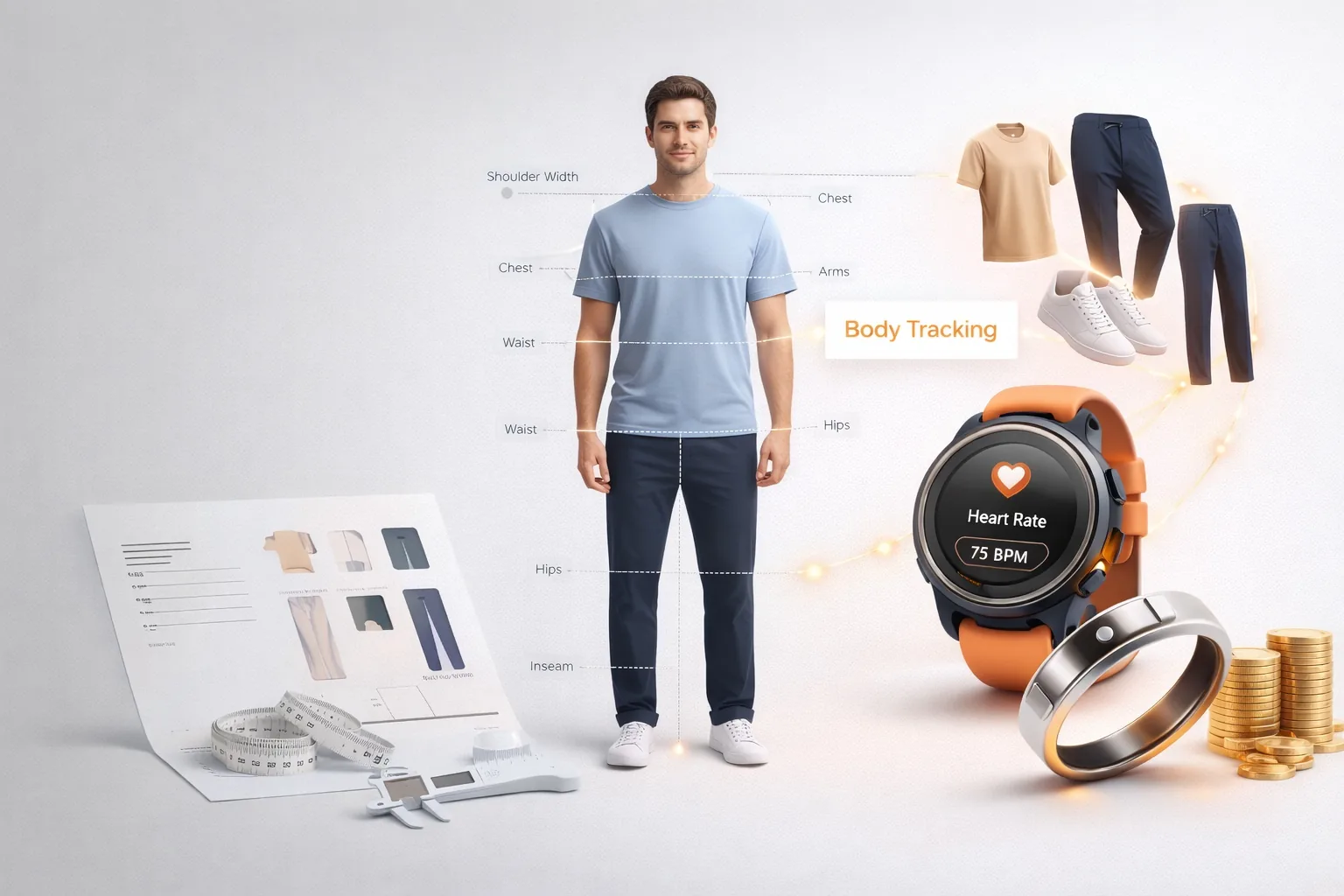
Taste, sizing, wearable context and fashion fit all feed the personal relevance side of the architecture.
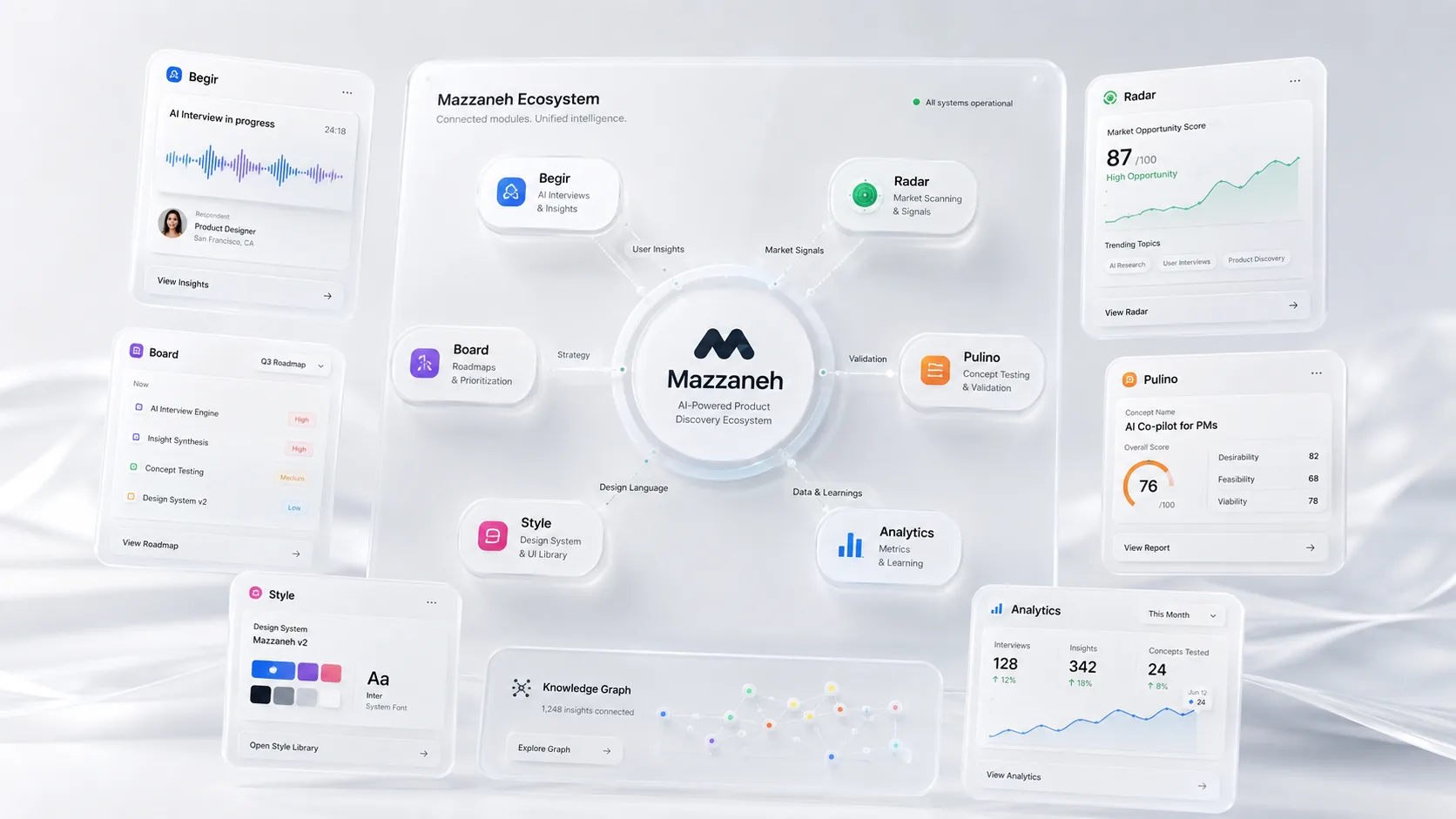
A more realistic ecosystem dashboard helps explain the business-intelligence layer and how signals from several modules can be read together.
The earlier product-flow visuals were replaced with cleaner, minimal images that are easier to read at this section’s size and more consistent with the page design.
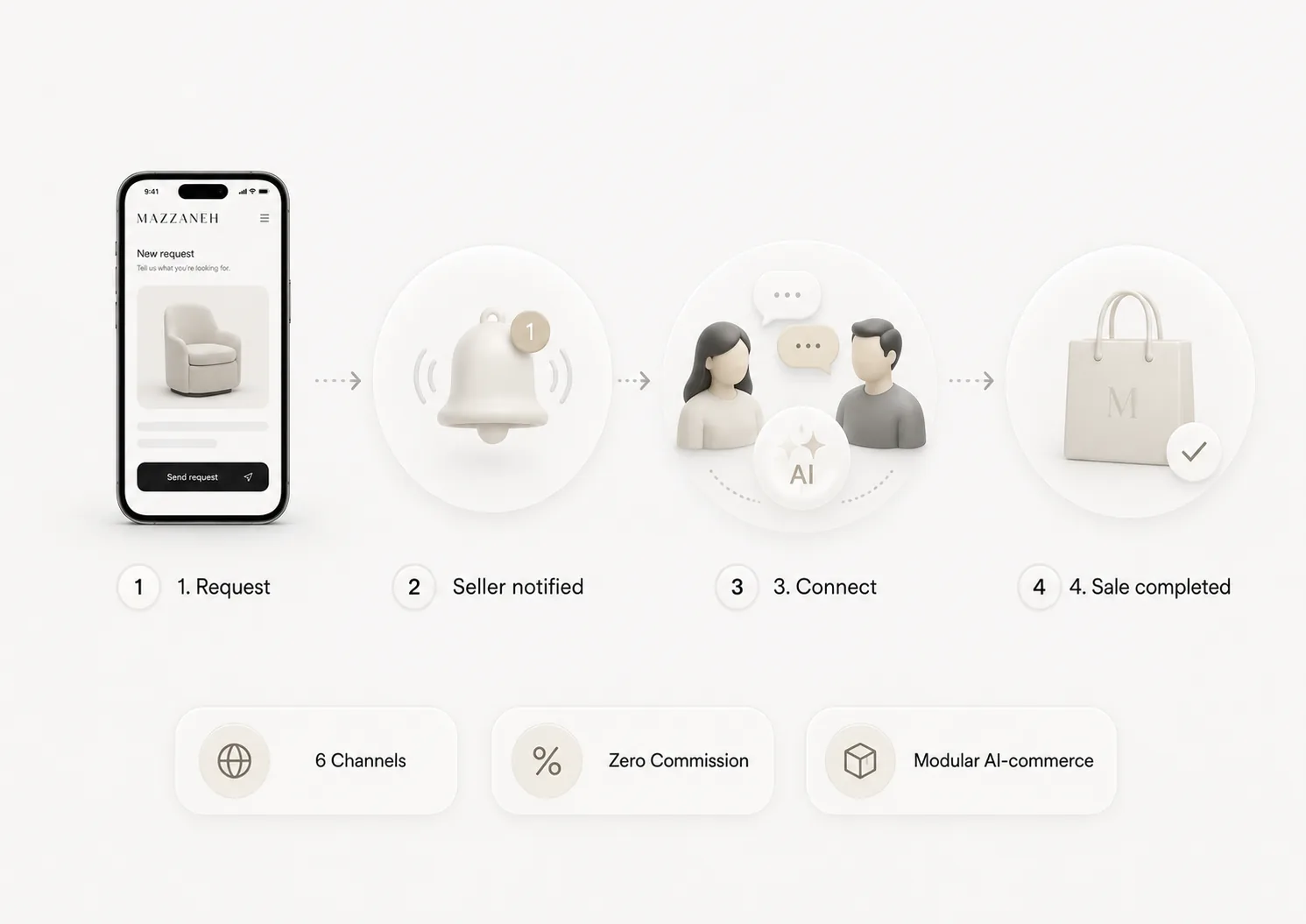
This visual explains one of the clearest Mazzaneh ideas: demand starts inside the app, the seller is notified, connection happens across channels and the sale can be completed while still preserving platform value.

Two things matter after connection: the system should understand what happened, and value should be able to circulate back into the ecosystem through wallet, rewards, cashback or user-benefit logic.
The live product demo keeps one clear focal point: a centered iPhone-style device with calmer spacing, better framing and lighter supporting previews underneath.
The demo is now presented as a realistic vertical iPhone 15 Silver-style showcase image. The interactive HTML remains available through the button, while the page itself stays cleaner and more stable across breakpoints.
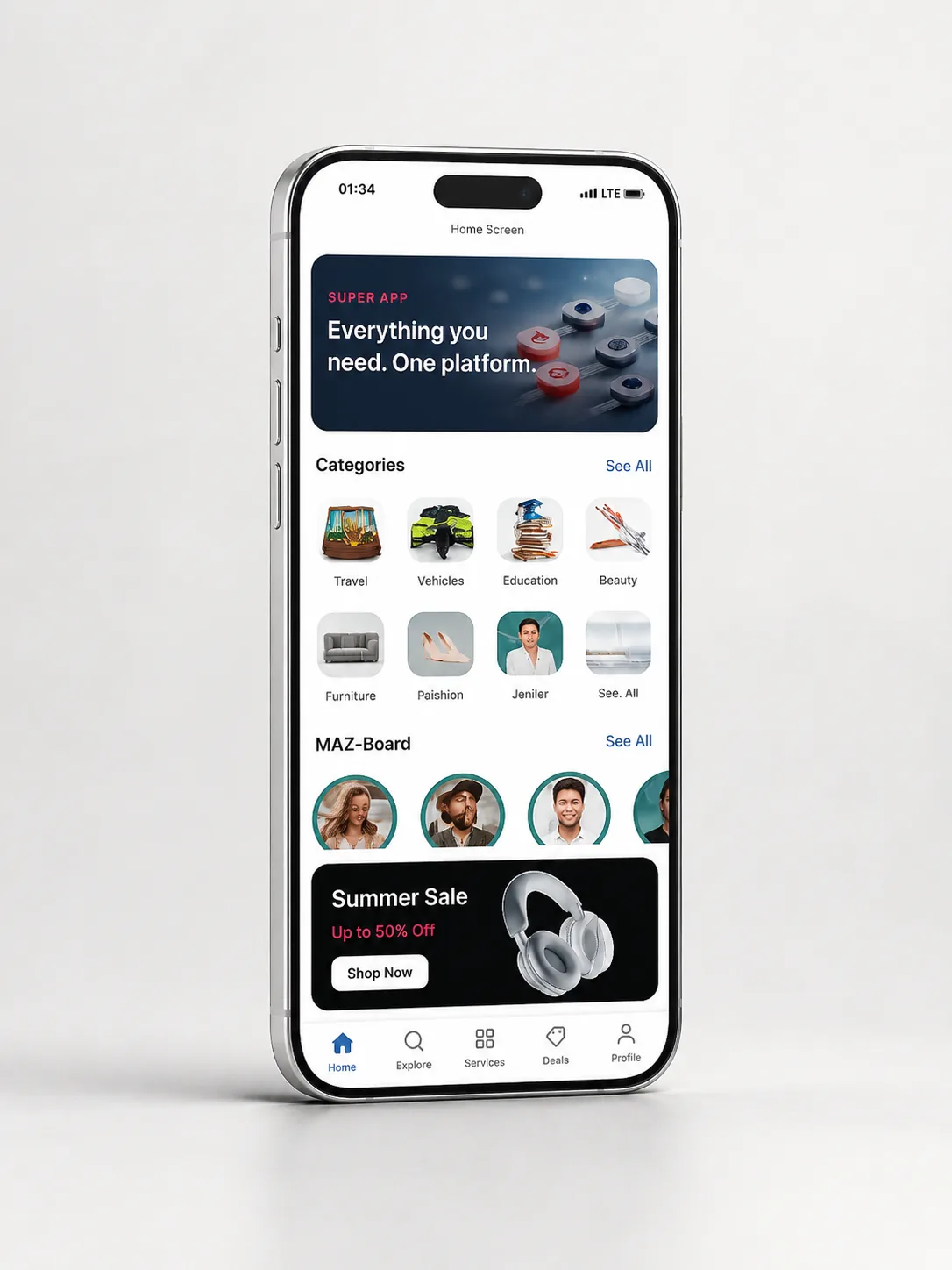
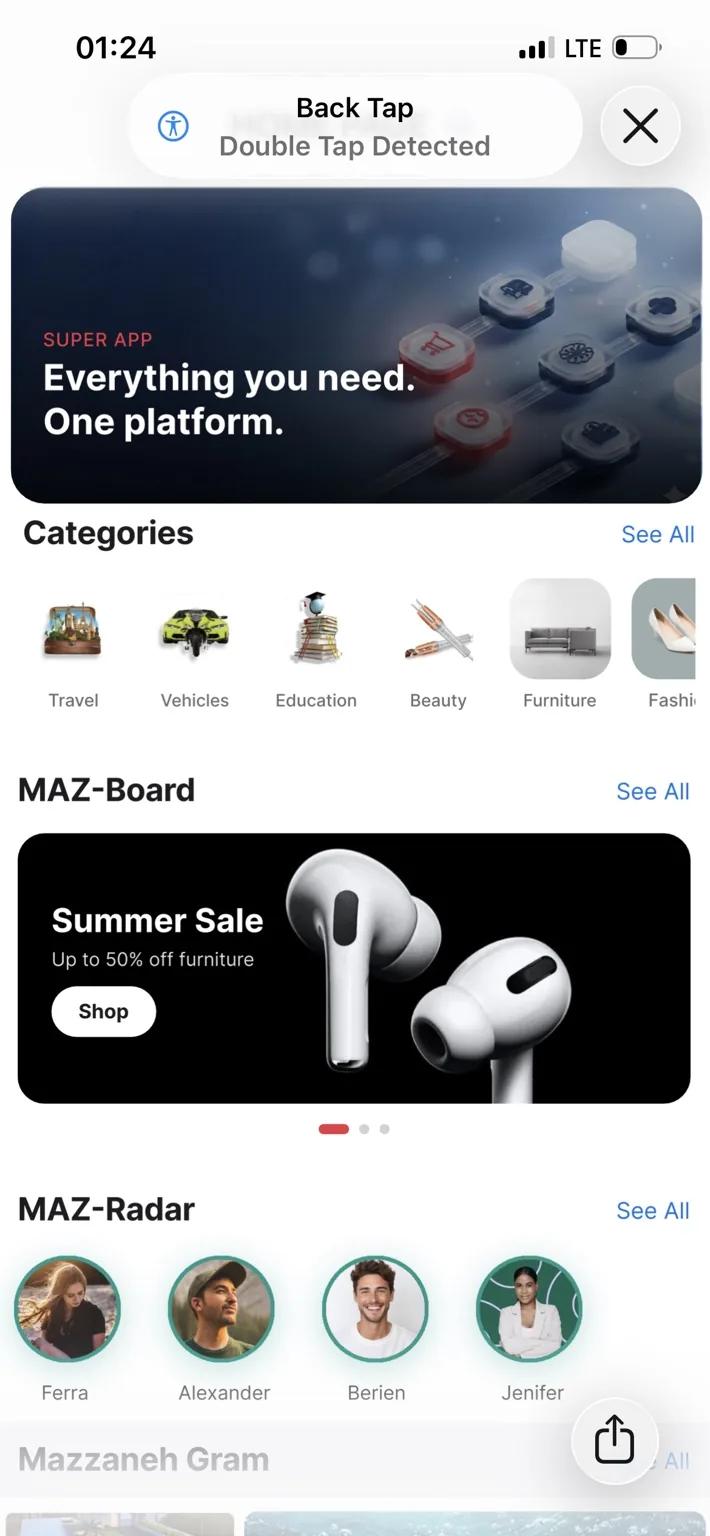 Home / entry surface
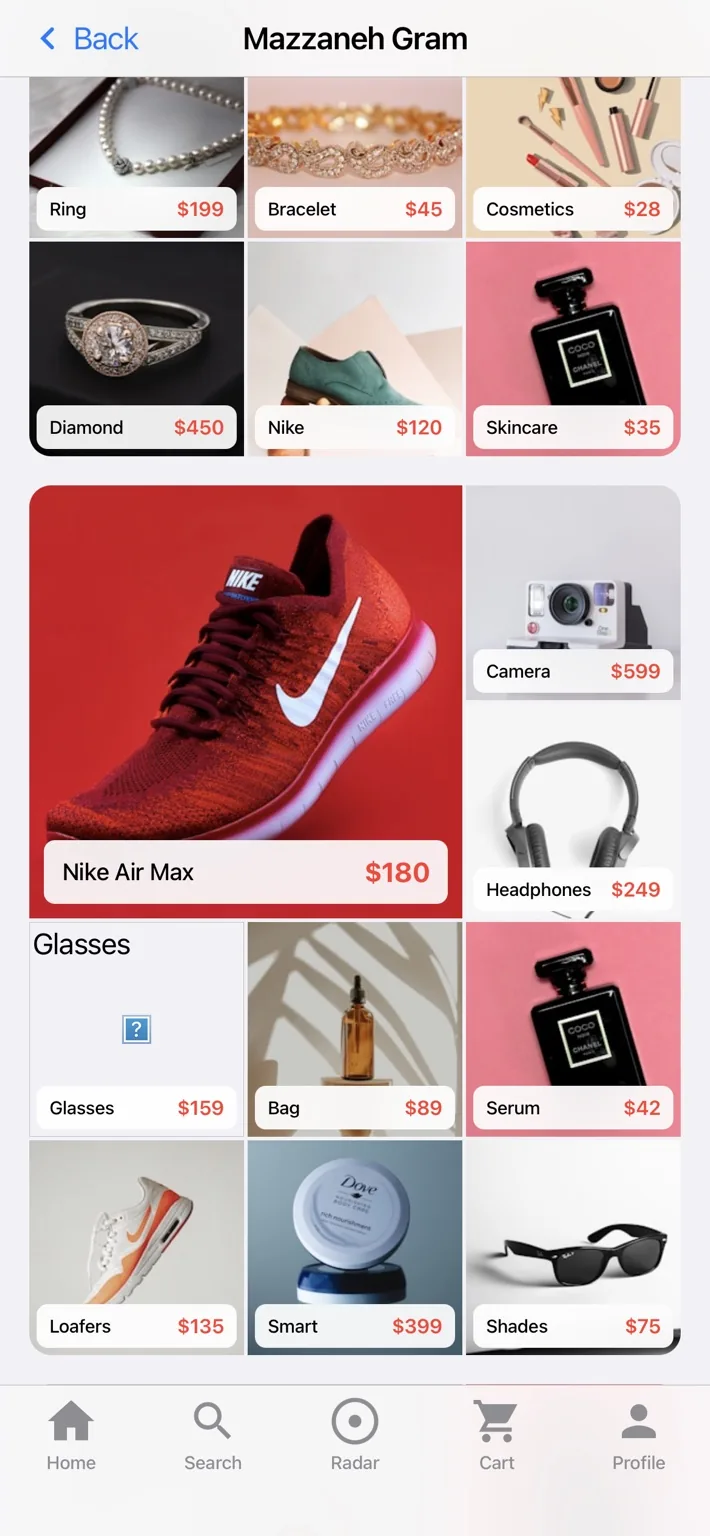 Gram / storefront discovery
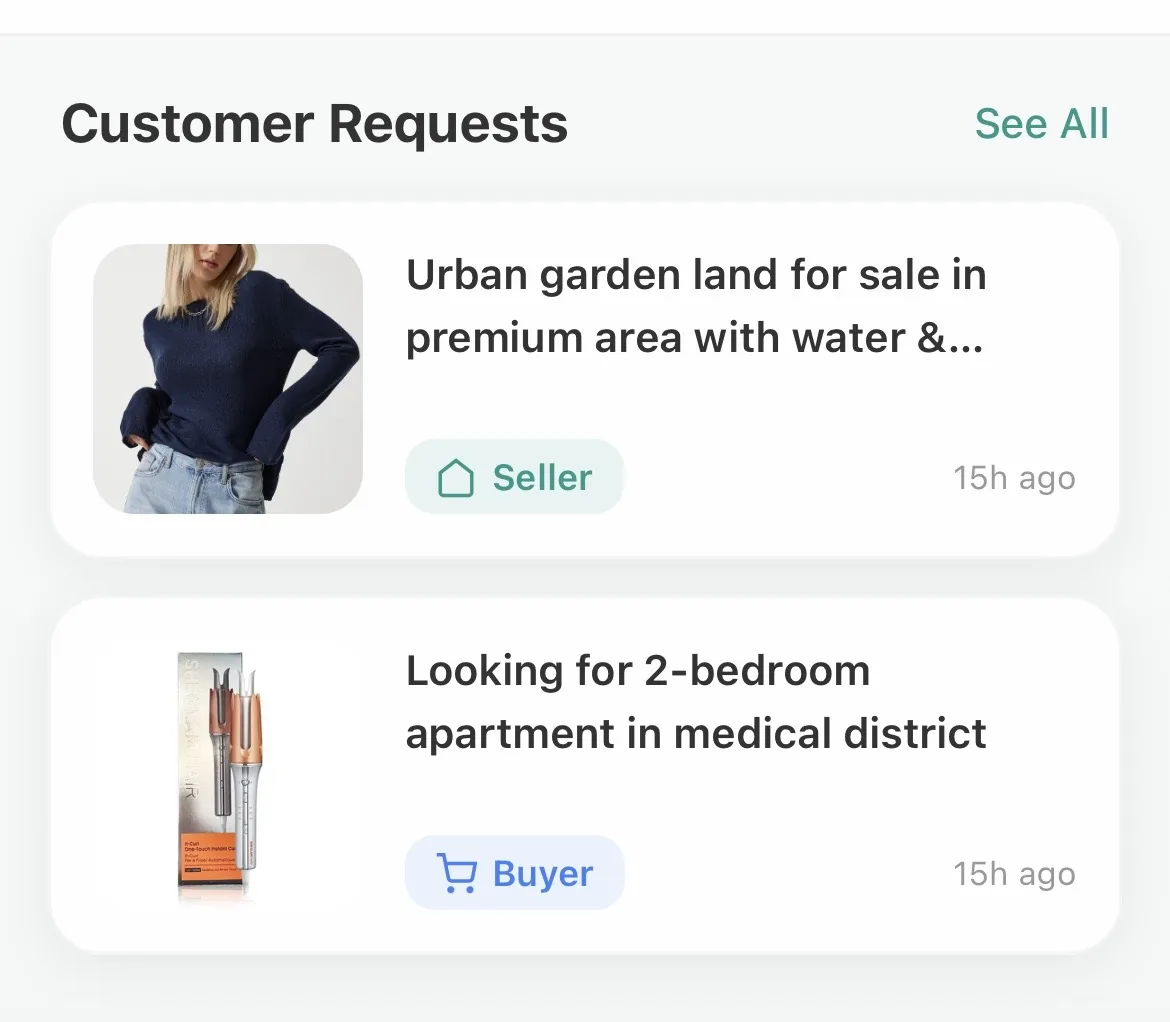 Requests / Begir & Bespar
These screens help explain that Mazzaneh was not only trying to match products and sellers. It also experimented with explicit human context, user value and personal relevance.
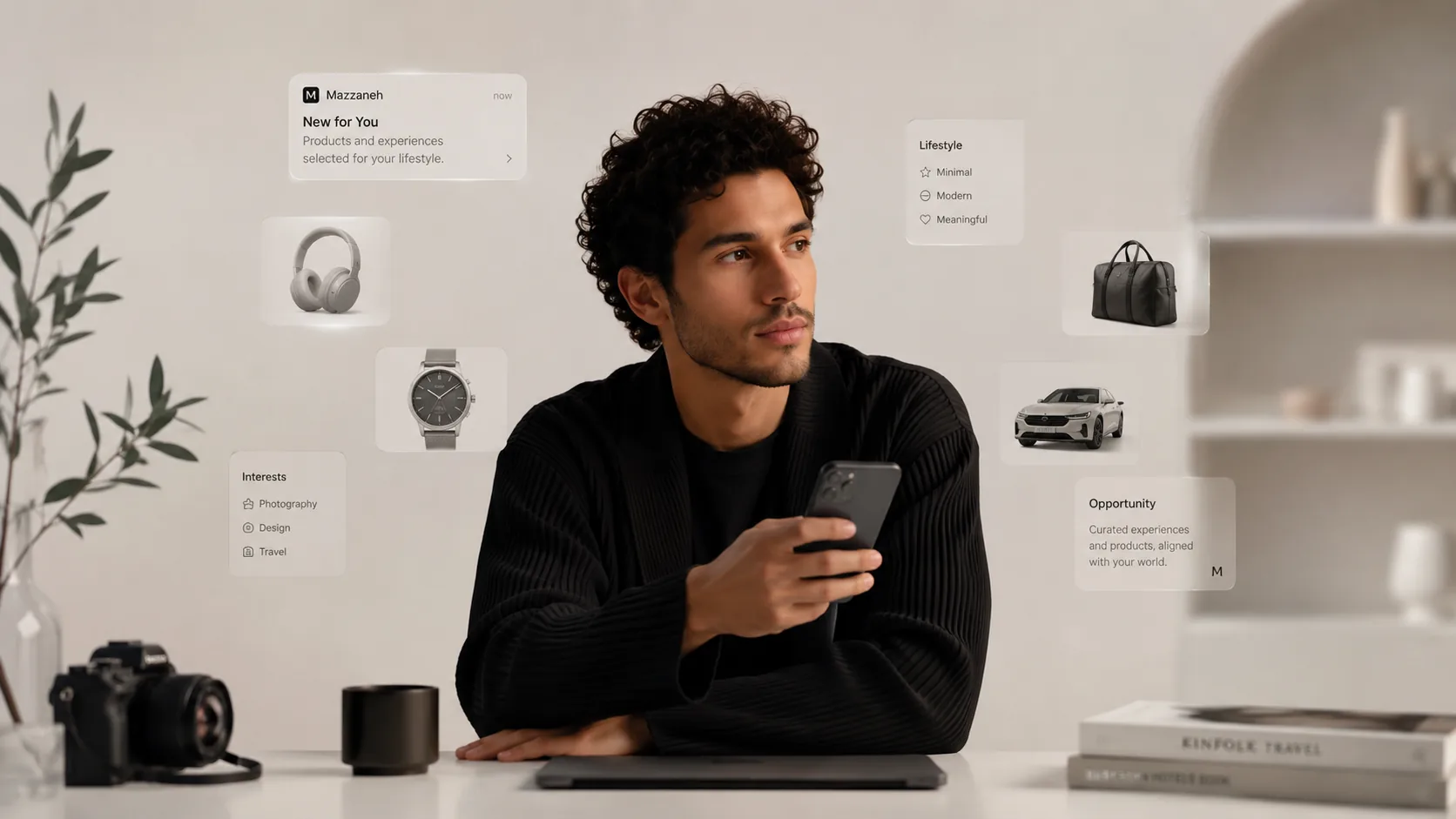
A more realistic lifestyle scene shows how explicit interests, context and opportunity surfaces can become part of a richer user understanding.
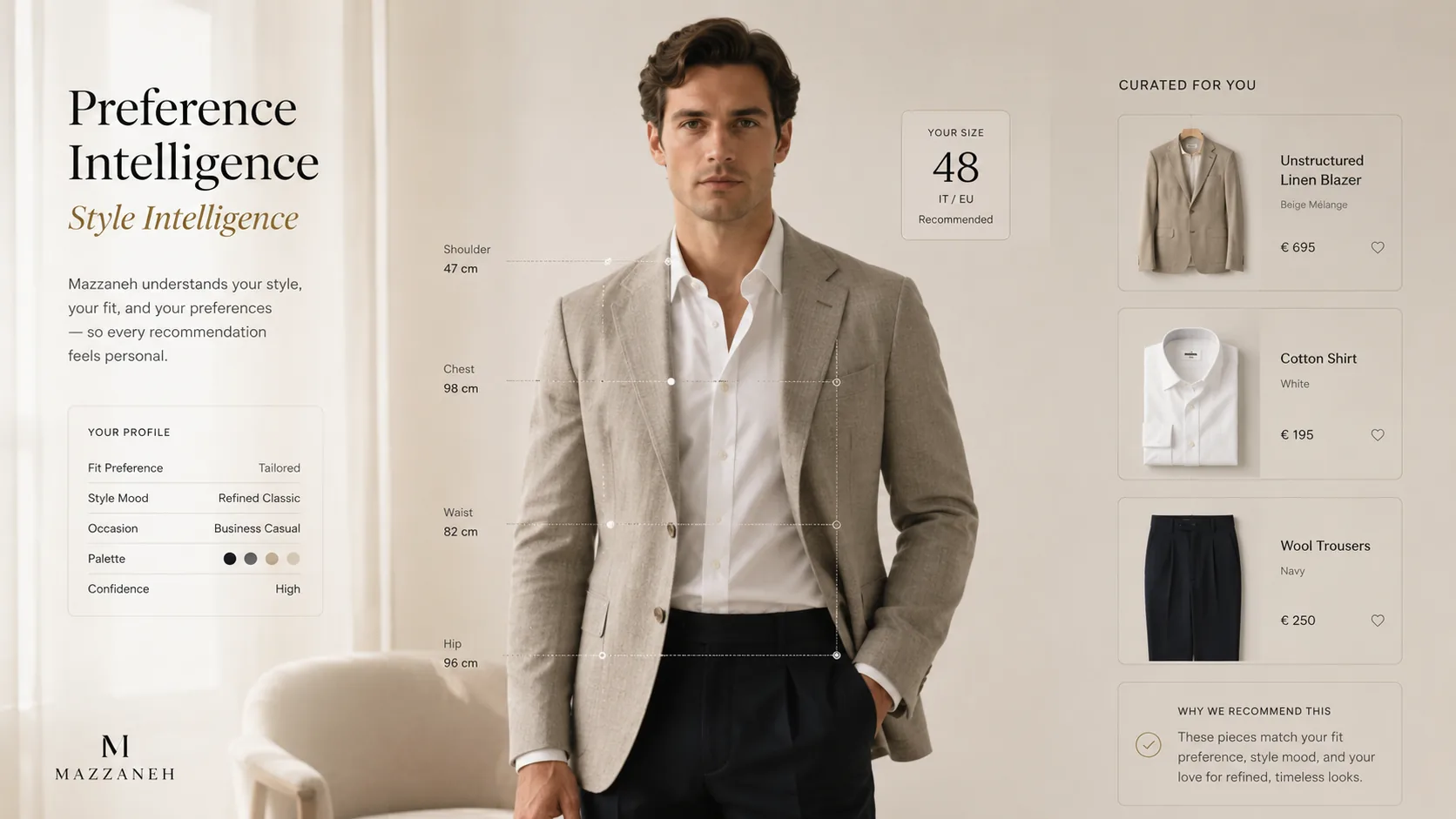
A more premium preference-intelligence image makes the style, fit and recommendation logic feel closer to a real product surface.